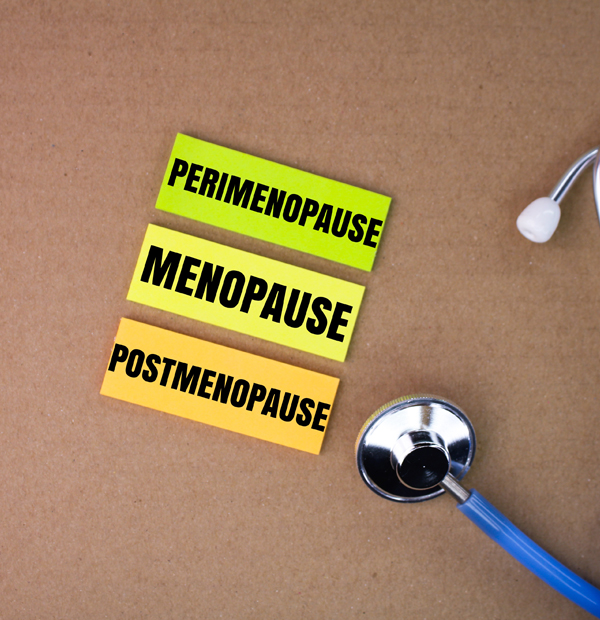
PERIMENOPAUSE AND MENOPAUSE

You feel like your body changed overnight, and you were told it is just your age.

The weight settled around your middle and will not leave. Your sleep broke. Your mood swings in ways that do not feel like you. The brain fog makes you wonder if something is seriously wrong. Your energy, your drive, your patience, your skin, all different, and seemingly all at once. You asked for help and were told this is normal, this is your age, this is just menopause, learn to live with it.

You were dismissed. What you are feeling is real, it is physiological, and it is far more than hot flashes. This transition reaches into your metabolism, your muscle, your brain, your bones, your mood, and your sleep, because the hormones that are shifting did far more in your body than control your period. And here is the part almost no one explains. Most of the hardest years happen in perimenopause, the transition that can begin in your late thirties or forties, often a decade before your periods stop, while every standard test still says you are perfectly normal.

Why you feel like a different person

For most of your adult life, estrogen and progesterone did not just run your cycle. They supported your brain, your mood, your sleep, your bones, your skin, and your metabolism in the background, quietly, so you never had to think about it. Perimenopause and menopause are what happens as that support is withdrawn, and the reason it feels like everything changed at once is that everything those hormones touched is affected at once.

Perimenopause is chaos, not decline. This is the most misunderstood part. People imagine menopause as a smooth, gradual fading of hormones. Perimenopause is the opposite. Hormones do not glide down, they swing wildly, estrogen spiking and crashing unpredictably while progesterone falls first and fastest. Those erratic swings are what drive the worst of the symptoms, the mood swings, the broken sleep, the heavy or unpredictable cycles, the anxiety that came from nowhere. And because your levels can still read normal on any given day, this is exactly where women are most often told nothing is wrong, during the very years they feel worst.

Progesterone falls first, and you feel it. Progesterone is your calming, sleep supporting hormone, and it usually declines before estrogen does. Its loss alone can explain the new anxiety, the racing mind at night, the lighter and more broken sleep, and the shorter fuse, often years before anyone would call you menopausal.

Estrogen loss reaches far beyond hot flashes. Estrogen supports your brain directly, which is why its decline brings real brain fog and memory changes. It helps maintain insulin sensitivity, so losing it makes your blood sugar harder to manage and weight easier to gain. It protects your bones and your heart. It keeps skin and tissues supple. Hot flashes are simply the most visible sign of a change that is happening throughout your entire body.

Your metabolism genuinely shifts. This is not in your head and it is not just willpower. As estrogen falls, insulin sensitivity drops and fat redistributes to your midsection, so the same eating and exercise that always worked suddenly does not. At the same time, the natural loss of muscle with age accelerates, which lowers your metabolism further. The weight gain is a real metabolic event, not a personal failing.

Stress, sleep, and the adrenals pile on. As the ovaries step back, your adrenal glands are meant to take over more of your hormone production. If you arrive at this transition already depleted by years of chronic stress and poor sleep, the adrenals cannot pick up the slack, and the whole transition hits harder. This is why two women can go through menopause completely differently, and why stress and sleep are central to the work, not side notes.

That is the real picture. This transition is a whole body hormonal shift that touches your brain, metabolism, mood, sleep, bones, and heart, and it is at its most turbulent in the perimenopausal years when you are most likely to be dismissed. The exact way it lands is yours alone. Being told it is just your age is not an explanation. It is an exit from a conversation you deserve to actually have.


Why you were told to just live with it

For a long time, women in this transition were offered very little, and what they were offered was often delivered with hesitation. Part of that traces back to old fears about hormone therapy that have since been re examined, which left a generation of women and providers wary of the very treatment that could have helped. Part of it is that standard testing during perimenopause often looks normal, so women are told nothing is wrong. And part of it is simply that this transition has been treated as a thing to endure rather than a physiological process to manage.

So you were handed an antidepressant for the mood, a sleep aid for the nights, and a shrug for the rest, each one aimed at a single symptom while the hormonal shift driving all of them went unaddressed. None of that asked what your hormones are actually doing, or whether replacing what your body is losing might resolve many of those symptoms at once. You were managed symptom by symptom, and never offered the bigger picture. That gap, between being dismissed and being genuinely understood and treated, is exactly where I work.

What I actually do

I do not dismiss this, and I do not treat it one symptom at a time. I map what your hormones are actually doing and address the transition as the whole body event it is.

I run the testing to see it clearly, not a single snapshot. A full hormone picture, estrogen, progesterone, testosterone, and the adrenal hormones, read in the context of where you are in the transition rather than against a one size range. Full thyroid physiology, because thyroid problems surge in midlife and mimic menopause exactly. Fasting insulin and metabolic markers to catch the metabolic shift early. Inflammation, nutrient status, and bone and heart risk markers, because this transition raises the stakes on both. Then I read it against optimal, not just normal, so I can see the actual hormonal landscape behind how you feel.

Then I address the whole transition, in order. I stabilize the foundations that determine how hard this hits, blood sugar, sleep, stress, and the adrenals that are meant to carry you through. I protect your metabolism and especially your muscle, because preserving muscle is one of the most powerful things you can do for your body in midlife. And I give a clear, honest evaluation of hormone therapy, which brings me to the question you actually came here with.

The honest truth about hormone therapy

You deserve a straight answer, because you have probably been given fear or vagueness instead.

For many women, replacing the hormones the body is losing, with bioidentical estrogen and progesterone, is one of the most effective things available for this transition. Done thoughtfully, it can ease hot flashes, restore sleep, steady mood, protect bone and brain and heart, and help hold metabolism and muscle, addressing many symptoms at their source rather than one at a time. The old blanket fears around it have been substantially re examined, and for the right woman, started at the right time, the picture is far more favorable than the scare stories suggest.

It is not right for everyone, and it is not a decision to make casually or off a single number. That is exactly why it requires a real evaluation of your history, your risks, and your goals, and why, where it is appropriate, it is prescribed and monitored by the licensed physicians I work with across all fifty states. My role is to make sure that decision is based on your actual physiology and a clear understanding of the tradeoffs, not on fear, guesswork, or a one size policy. You deserve the real conversation, and that is what I give you.

The nutrition, to match a changing body

I am not dogmatic about diets, and midlife is a time when your nutrition genuinely needs to change, because your body is not the body that handled food the way it used to.

Protein becomes more important than ever, because protecting muscle is central to defending your metabolism and your strength through this transition, and most women are not eating enough of it. I stabilize blood sugar, since the drop in estrogen makes you more insulin resistant and more prone to gaining around the middle. I prioritize the nutrients that matter most now, the ones that support bone, mood, and hormone production. I make sure you are eating enough, because the harsh dieting many women reach for to fight midlife weight gain backfires by adding stress and stripping muscle. And I build it around your real life, because this is a long transition and the plan has to be livable.

The training, to protect what matters most now

If there is one non negotiable in midlife, it is strength. The natural loss of muscle and bone accelerates through this transition, and that loss is what drives much of the long term decline women fear. Strength training directly opposes it.

So resistance training leads, because it builds and preserves the muscle and bone that protect your metabolism, your strength, and your independence for decades to come, and it is one of the most powerful tools you have right now. I program progressive strength work scaled to you. I add daily walking and movement, which support insulin sensitivity, mood, and sleep without adding strain. And I am careful with excessive, exhausting cardio, because in an already stressed midlife body it can raise stress hormones and work against you. The goal is to build and protect, because what you keep now is what carries you forward.

The arsenal behind the work

Most midlife care is a symptom by symptom handoff. I have a clinical arsenal aimed at the whole transition.

I investigate aggressively. Not a single hormone check. I can pull from more than three thousand testing options, full hormone mapping including the DUTCH panel, complete thyroid physiology, fasting insulin and metabolic markers, inflammation, bone and cardiovascular risk markers, nutrient status, genetics, and toxin and mold screening, plus an in person referral network for imaging and bone density. I see the whole landscape before I treat anything.

Hormone optimization, built around you. This is at the heart of midlife work. I map estrogen, progesterone, testosterone, thyroid, and the adrenal hormones together, and where it is appropriate, restore them with bioidentical hormone therapy designed around your physiology and goals, prescribed and monitored by the licensed physicians I work with across all fifty states.

Personalized, compounded medications, made for you. This matters enormously in midlife. Rather than one size mass produced hormones, I can have bioidentical hormones custom compounded for your body, the precise hormones, the precise doses, and the delivery that fits you, whether that is estrogen, progesterone, or low dose testosterone, which many women are never even offered. Compounding pharmacies prepare these to order, so your therapy fits you rather than the average patient a factory designed for. It is the difference between a suit off the rack and one cut to your measurements.

Peptide therapy. Precise signaling tools that can support recovery, body composition, tissue and bone health, and the growth hormone axis that also declines with age, matched to your goal and passed through at wholesale rather than marked up to retail.

Targeted supplementation. Pharmaceutical grade support for the specific needs of midlife, bone, mood, sleep, and hormone production, chosen for your physiology rather than a generic shelf.

Regenerative and advanced therapies. When a case calls for it, I coordinate access to the deeper end of the toolkit, the regenerative, recovery, and longevity therapies most clinics never touch, through the providers and pharmacies I work with directly. The full landscape of modern medicine, with one person coordinating the strategy behind it.

Not one tool applied to everyone. The right instruments out of a deep arsenal, custom built for your body and sequenced in the order that actually works.

What changes

When the transition is actually understood and managed, midlife stops feeling like something happening to you. Sleep returns. The mood steadies and the fog lifts. The weight becomes responsive again as your metabolism is supported instead of abandoned. Your energy and drive come back. And you are protecting the things that matter for the decades ahead, your muscle, your bones, your brain, your heart, rather than quietly losing them.

Most women who come to me in this transition are not asking for the impossible. They are asking to feel like themselves again, and to stop being told that decline is simply the price of being a woman over forty. It is not. That is the real destination, a transition you move through with strength and clarity, not one you merely survive.

This is the work of my flagship, the Complete Vitality Program. If you were told this is just your age and sent away, you were not given the truth. This transition can be understood, and it can be managed, and you deserve to feel like yourself through it.

0
    0
    Your Cart
    Empty CartYour cart is emptyReturn to Shop
    Secure Checkout
    Fast Shipping
    Easy Returns